

For most of my late 20s and early 30s, once I had gotten out of the Marine Corps, I wasn’t exactly economically productive. During those years, I got a B.A. in English, of all the nonproductive majors I could have chosen, then doubled down by getting an M.A. in the same subject. I worked low-paying retail jobs to pay my rent while in school, and I also took on loans.
Read more U.S. Imposes 50% Tariffs On Canada, Iran Says ‘Entire World’ Knows It Won The War: Latest Updates
After getting my master’s, I changed my mind about going on for a Ph.D., because I decided I wanted to do something useful with my life, and applying deconstructionism, semiotics, and questionable versions of psychology and sociology to literary texts seemed to me as far from utility as one could get. I didn’t have a lot of hope I’d be able to find a good job with my degrees in literature, but, nonetheless, I put my resume out into the world.
For reasons I’m still not sure about, I included one line about knowing Korean, because when I was in the Marine Corps, I’d gone to the Defense Language Institute and allegedly learned it. My grasp on the language had never been that strong, and I hadn’t used it in six years since I’d been discharged, so I don’t know why I even included it. But I’m glad I did, because that one mention of Korean got me an email from the National Security Agency, which was undergoing a flurry of hiring activity in the wake of 9/11.
I didn’t have many better options, so I studied like crazy, flew to Maryland, took the language test and passed. That qualified me to undergo the other screening tests, including a polygraph. I’m not sure whether it was more surprising that I passed the Korean test or that I got through the security vetting, but in any event, seven months later, at 31 years old, I had my first real job. The NSA had thrown me a lifeline and made me suddenly productive.
I was so grateful to be employed in something that didn’t pay by the hour and that left me at least a few dollars before the next paycheck came. I was as nearly content as an employee can be. I realized the taxpayers were providing me a lot, and I worked hard to give them as much return on their dollar as I could. When I learned three months after taking the job that my wife and I were expecting a child, I was even more grateful and worked even harder.
What surprised me, though, was that after learning the nuts and bolts of the business for a few years, I ended up being actually kind of good at it. As useless as I thought it was, my background in literature had helped me build exactly the kinds of skills a good eavesdropping analyst needs: the ability to absorb and comprehend complex texts, to put the new information in context with other knowledge and to communicate the findings in clear prose. (OK, clear prose wasn’t exactly taught in the academy of the early 2000s, but I picked it up decently on my own.)
Slowly, I started to become respected for my expertise on specific topics. In addition to being a subject matter expert, I also gained a degree of influence in matters related to how the NSA approaches analysis. Both during informal office discussions and through posts on the agency’s internal social media, I argued that the agency was too tied to cautious, mistake-avoidance analysis meant to protect it from blame, rather than taking risks to provide information that was actually clear and useful.
I’m not claiming that I changed the face of either analysis in general or North Korean intelligence specifically, but I was a reasonably influential voice for change in both. If it’s important that the intelligence community provide the best information to government leaders — what the community calls “decision-makers” — then I had achieved my post-grad-school goal of finding something useful to do.
However, I didn’t always love working at the NSA. Like any large organization, it can be defensive about its own existence, which leads to a stodgy, hidebound culture that doesn’t exactly adapt well to new realities. I was frustrated enough at one point that I left to work at Microsoft as a North Korea cyberthreat analyst, but I quickly returned when I realized I would never be as useful as I was at the NSA.
When I came back, I was determined to do my best in the time I had remaining to change the culture for the better and to leave the state of North Korean analysis in a strong place. For a few years, that’s what I did. Then the 2024 election happened.
The fork in the what, now?
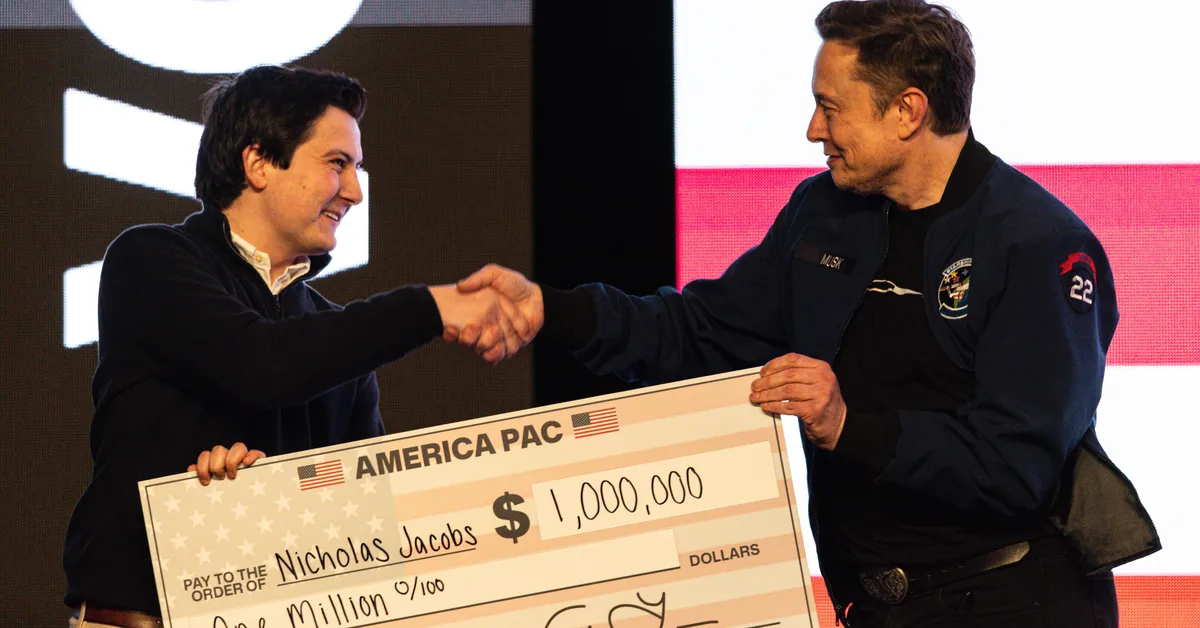
When the Elon Musk-led Department of Government Efficient sent its “fork in the road” email on Jan. 28, 2025, I didn’t get it. Like a lot of NSA employees, I didn’t have a “low side” (unclassified network) email. I first heard about the email and its offer of a deferred resignation from my brother, who’d seen it in the news and asked if I’d be able to use it. Since the initial reports seemed to suggest that defense employees would be exempt, I assumed it didn’t apply to me. (NSA is part of the Department of Defense, or what is now the Department of [ick] War.) In the following weeks, it began to seem as though we might be included in the offer after all. NSA’s leadership, to their credit, worked very hard to try to get us good information in a chaotic environment, but it still took time to get answers, and ultimately, I had only a few days to decide whether to take the offer of deferred resignation along with early retirement — four and a half years short of full retirement — and leave the only job I had ever been good at. That’s exactly what I chose to do.
There was no one singular reason why I left, but among them were the following:
-
Threats by President Donald Trump early in his term against Greenland and Canada made me hesitant to stay in the Department of Defense. I didn’t want to be tied to such an obviously immoral and senseless military adventure if it happened.
-
The firings of trans military members. The fact that this happened wasn’t a surprise, but the way it happened seemed to me beyond the pale. Both Trump and Defense Secretary Pete Hegseth veered wildly out of their way to intentionally run over the honor of trans military members, suggesting their attempts to become more psychologically, emotionally or physically whole conflicted with a military member’s “commitment to an honorable, truthful, and disciplined lifestyle.” Treating trans people in this way felt to me like a very dangerous elevation in rhetoric and political scapegoating. It also told me that Trump’s second term would be far more dangerous than his first.
-
My mother was having serious medical issues, and my parents are both getting older, so taking early retirement to move back home to Ohio seemed a good way to be with them.
-
The sneering contempt DOGE showed for federal workers, characterizing us as lazy and assuming we’d be more productive in the private sector, made me feel like I had no need to be where I wasn’t wanted.
-
I wondered if, in the event I stayed, I’d get fired anyway for some comment I’d made or would make.
Ultimately, I took early retirement, but I turned down the free seven months of paid administrative leave. This was undoubtedly unwise, and it probably cost me more than $80,000, but because DOGE was crowing about how lazy government employees would be happy to take money for nothing, I didn’t want it. Nor did I want to technically still belong to the government in case they later changed their minds and wanted to call us all back off administrative leave. If I really thought the Trump administration was that bad, then I felt I had a duty to cut ties, even the loose ones I’d have during those seven months.
Read more ‘Let Me Finish’: NBC Host Clashes With MAGA Senator Desperate To Blame Biden For Trump’s Economy
So have I become more productive?
In a word, no. Nobody in Canton, Ohio, cares that I know a lot about North Korea, or that I know all the rules for writing reports for the NSA. I’ve tried to find writing jobs, since I was a senior reporter and editor when I worked for the government, but most jobs want someone responsible for social media posts. I’m not even on social media, except for stupid LinkedIn, which my job search unfortunately requires me to use.
I’ve applied for dozens of private-sector “intelligence” jobs, but for reasons I don’t understand, I’ve barely even gotten any interviews, and no job offers. Maybe I seem too senior for entry-level positions, no matter how much I make it clear that I know I’m starting over so I’ll take an entry-level job. Maybe I just seem too old. Whatever the case, I’ve had to look well outside anything I’ve ever done to get any kind of response, and even then, I mostly get ignored.
I’ve briefly tried a few jobs that did hire me, mostly blue-collar, physical labor positions. However, with each of these jobs, I found that 53 is too old for the work, especially with a body that the Marine Corps already had a six-year bite at decades ago.
I took the LSAT and was offered a full ride to Akron Law School, but only a few days in, I was so overcome with doubt, I had to take a leave of absence. I couldn’t stop thinking, What if I worked for three and a half years and AI took all the lawyer jobs, or what if I worked all that time and didn’t end up finding a job because nobody wanted to hire an old junior lawyer? I’d put all that time and effort into mastering one job, surely the same could happen in law school. Maybe I’ll go back in the fall and try again, and maybe I won’t. It’s a lot to talk myself past all the reasons not to go.
Was the ouster of thousands of veteran workers good for the country?
If the point of getting rid of people like me was to make us more productive, and if productivity is measured in terms of money earned, then I’m a failure. Eighteen months ago, I was a senior North Korea analyst at the National Security Agency. I was a GS-15, the highest level you can attain while still doing real work, as I always put it. Now I drive for DoorDash while I continue to look for anything to do that’s worth doing. My pension is 20% of what my salary was. I realize even a small pension is a luxury these days, and I’m grateful for it, but even in a cheap place like Canton, it doesn’t go far. My wife, who is a teacher, is getting paid half here what she was paid working in Baltimore.
Of the 140,000 employees who’ve taken some kind of buyout or early retirement, many went straight into full retirement. They were ready to retire anyway, and the government actually gave them a more lucrative deal than they would have otherwise had by letting them first take months of administrative leave. That means it cost the government money, rather than saving it.
Others have gone into government contracting or even returned to their old jobs when it became apparent that the government wouldn’t function without them. For the rest, there is some data that suggests I’m not alone, and that the labor market has struggled to figure out what to do with us mid- to senior-level employees with our narrowly focused backgrounds all hitting the market at once. It seems unlikely that freeing up all of us up for the private sector has led to a bump in productivity.
Good conservative thinkers have a point that maybe government shouldn’t be in the jobs program business, and maybe on paper my loss is good for the country. It’s extremely difficult to measure return on investment with intelligence, and it’s possible that as hard as I tried, I didn’t give back what I was getting. Even granting the assertion that the work I did was low value, I don’t understand why, as with the decision on trans military members, there had to be such an added level of cruelty to the decision. I didn’t take the job at the NSA because I wanted an easy job at the expense of the taxpayers or because I even particularly dreamed of working there. I took it because the post-9/11 world seemed to be telling me that it was work it valued — and needed. I adapted myself to that world. If the world has changed, I can accept it, but I can’t accept being treated like I am getting my just desserts.
If, on the other hand, past administrations that believed in the need for quality intelligence were right, then what does that say about this administration’s decision to shame workers like me into leaving? There are things I knew that nobody else knew — things that never made it into a training manual. You can’t replicate my expertise by replacing me with younger and cheaper analysts, and you can’t teach it all to AI. If what I did mattered half as much as most Americans thought it did when I first took the job, then not only have I gone from being highly productive to almost no production at all, but the nation has lost an irreplaceable source of information.
It seems unlikely that DOGE took adequate time to determine whether chasing people like me off was a good bet, since the fork in the road email came a week after Trump’s inauguration. Nor did they consider how likely it was that thousands of people who had thrived in one specific environment would move easily into another, as though a giraffe can suddenly go from nibbling the tops of trees to grazing on grass. I wonder how many people there are who have gone from being the best at an unheralded task to wondering what the hell they’re supposed to do now.
The government workers the administration claims not to like — the slick careerists — are doing fine. They’ve either weathered the storm, gone into even higher-paying contract work on top of retirement or used the networks they spent time building up instead of doing real work to land nice private-sector jobs. It’s the people who tried to just do the work and do it well who were most affected by all of this.
Losing a job because the winds of economic history have blown against you is one thing, but a wind manufactured for political reasons is another. It’s true I wasn’t fired, I just bowed to the pressure to leave. But that pressure was so strong that it felt like the same thing to me. When Musk brandished a chainsaw on stage, he thought it symbolized cutting down a forest of waste, but all I could feel was the severing of a lifeline I’d been thrown decades earlier.
Update: After I wrote this article in early June, I actually did find a job. In late August, I will begin working as a lab instructor at an alternative high school that tries to help students who have fallen behind to make up credits in order to graduate. This job plus my pension gets me to 40% of my former salary, but it means I got to take down my LinkedIn profile, and hopefully I will never have to use it again.
Jacob R. Weber is a former senior North Korea analyst with the National Security Agency. He is also a fiction writer whose work has appeared in New Letters, where it won the Robert Day Award for Fiction, as well as The Bellevue Literary Review, Bridge Eight, and many other journals. His book of short stories, “Don’t Wait to Be Called,” won the Washington Writers’ Publishing House Award for Fiction. He has recently self-published the novel “The Prince of Zendia,” a “totally true, made-up story” about the National Security Agency.
Do you have a compelling personal story you’d like to see published on HuffPost? Find out what we’re looking for here and send us a pitch at [email protected].
Read more Shelley Fabares, ‘Johnny Angel’ Singer And Veteran Actor, Dies At 82










Leave a Reply