
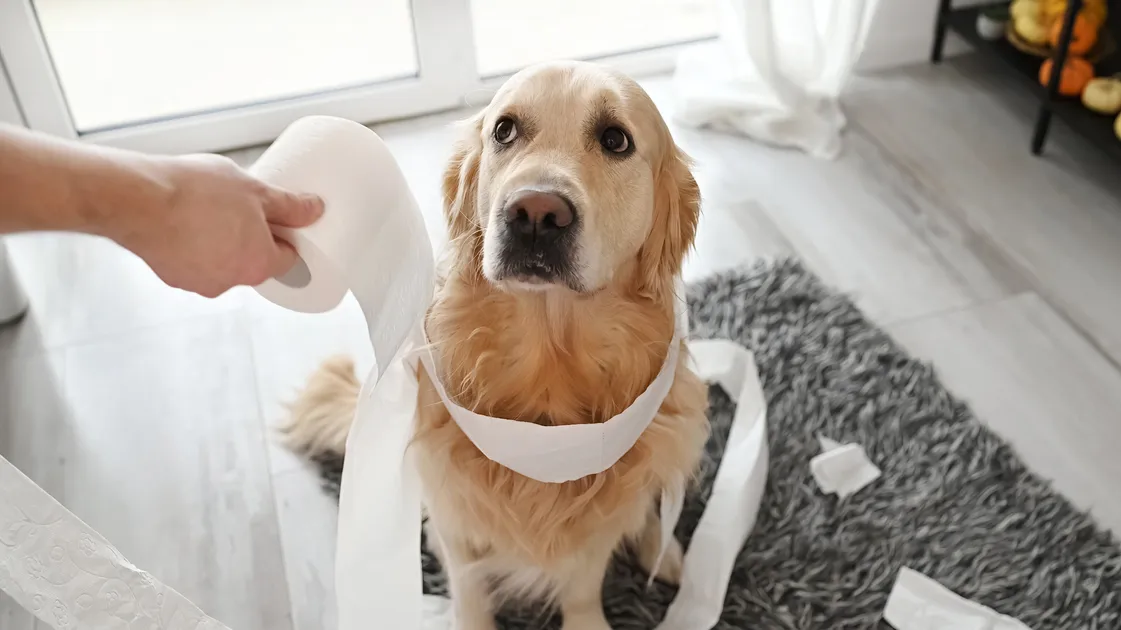
Tracy Murray found the first chewed hole while she was half asleep, pulling on a pair of black yoga pants. On the bed, her mini goldendoodle Kobe lay stretched out next to his brother, Maple. Kobe’s head was down, his ears were flat, and he let out a long, heavy sigh. It was the look of a dog caught red-handed, the kind that makes you swear a dog knows what it did was wrong. Beside him, Maple stared without blinking, like a dog with a solid alibi.
Read more Men Reveal Why They Held On To Their Combover For So Long — And Then What Changed
Murray runs a dog-walking business in Washington, D.C. She works with dogs all day, and she thought Kobe’s look was a confession. But it did not add up. Kobe ignores shoes, trash and clean laundry. He only goes after her sweaty post-run clothes on the floor.
Two weeks earlier, she had started running without the dogs because of the heat. “So maybe Kobe’s face wasn’t really guilt,” she said, “but more like him confirming that I wouldn’t be going out without them again?”
Plenty of owners are certain they can read their dog’s guilty look. In one survey, 74% of dog owners said they believed their dog felt guilt. But when researchers have tested the behavior, they’ve found the “guilty look” is much more closely tied to human cues than to evidence of a dog’s wrongdoing.
In a 2009 study, after their owners had told them not to eat a treat and then left the room. When the owners returned, some were told their dog had eaten the treat, whether or not it actually had.
Dog behavior researcher Shawna Baskette, who translates academic research for everyday dog owners, has read the study closely. “Innocent dogs looked guiltiest. Dogs that had obeyed the command and did not eat the treat but were wrongly scolded by their owner displayed the most ‘guilty’ behavior,” she said. “The posture functions as a conflict-reducing signal to appease an upset human, not as a display of guilty conscience.”
Ali Smith, a canine behavior consultant, said, “I genuinely think our dogs often know we’re mad before we know we’re mad. They see our posture change. Our face changes. Our breathing changes. The way we walk towards them changes. We stare at the shredded cushion and then look at them, and they can see the storm coming.”
What owners take for shame can be a set of appeasement signals: ears back, a lowered body, lip licking, looking away. “The dog isn’t necessarily saying, ‘I know I ate the sandwich and I’m sorry,’” Smith said. “They’re much more likely saying, ‘You’re upset. Can we make this situation less scary, please?’”
Smith blames Hollywood. “We grow up with dogs in movies who understand incredibly complicated human conversations, know right from wrong, deliberately break the rules and then pull a guilty face when they’re caught,” she said. “Real dogs aren’t Disney dogs.”
Dogs also learn to expect trouble. Chris Loverseed has worked professionally with dogs since 2009. “What gets overlooked a lot is the classical conditioning side of it,” said Loverseed, owner of Positive K9 Training. “If chewed-up shoes have been followed by an angry owner before, the shoes and the owner together can start to mean trouble is coming. It is a bit like Pavlov’s bell meaning food is coming.”
That’s not the same as a dog regretting what it chewed an hour earlier. “Once the shoe is already chewed, you’re too late to tell the dog off,” he said. “It doesn’t teach them what to do next time.”
Read more These Comfy Fall Clogs Run Circles Around Birkenstocks — And They’re Shockingly $16
But what if the look comes first, before the owner has noticed any mess at all? Smith said timing matters. “When did the behavior actually start?” Smith added. “Was the dog ‘looking guilty’ before you noticed the mess, or did it begin when you saw the mess, changed your expression and said, ‘What have you done?!’”
Andy Gibbs and his wife came home from dinner in a completely normal mood to find their 3-year-old poodle mix cowering in a corner. “He was behaving guilty before we knew there was anything for him to be guilty about,” Gibbs said. They started looking and found a chewed-open box and a torn bag of dehydrated onions, with some onions apparently vomited nearby. Onions are toxic to dogs, and the night ended with an overnight hospital stay, a blood transfusion and a bill of around $5,800. The dog recovered.
Gibbs, who previously developed technology designed to remotely monitor changes in dog behavior, does not dispute that dogs can read us. But his dog was already hiding before they had any idea something was wrong.
“I have no question they can recognize that they’ve violated a home rule and alter their behavior before an owner gives any cue,” he said. “However, I can’t prove they experience the same reflective moral emotion that we humans do.”
In a 2015 study of 96 dogs, researchers tested whether the guilty look shows up when the owners give nothing away. Owners were told to stay neutral and to judge, from the dog’s greeting alone, whether it had eaten forbidden food. They couldn’t. The researchers concluded that the dogs didn’t show a guilty look in the absence of scolding.
Baskette, the behavior researcher, is careful about how far the evidence goes. “This doesn’t mean that dogs are emotionless,” she said. “But the controlled studies showed that guilt is not the explanation.”
What does matter is what owners do when they misread the look. “Unless you catch your dog directly in the act, your dog cannot associate their behavior with the scolding,” Baskette said. “Your dog’s behavior doesn’t change, but your dog does learn that you are unpredictable. That produces more anxiety and more appeasement displays, which owners read as more guilt.”
For Smith, there’s a more useful question than whether the dog feels guilty. What can the owner change so the dog gets it right next time? “If your dog genuinely understood what you wanted, why does he keep doing it?” Smith said. “He’s not just being obstinate or stubborn; you set him up to fail.” Her fixes are simple. Put the trash behind a cupboard door, teach the behavior you want and reward it.
Back to Kobe, flat-eared on the bed the morning Murray found the first chewed hole. Murray runs without the dogs three or four times a week now, and the greeting never changes. She has stopped calling it guilt, saying, “It happens every time.”
Read more Here’s What’s Really Worth Buying At Old Navy, According To People Who Swear By It





Leave a Reply