
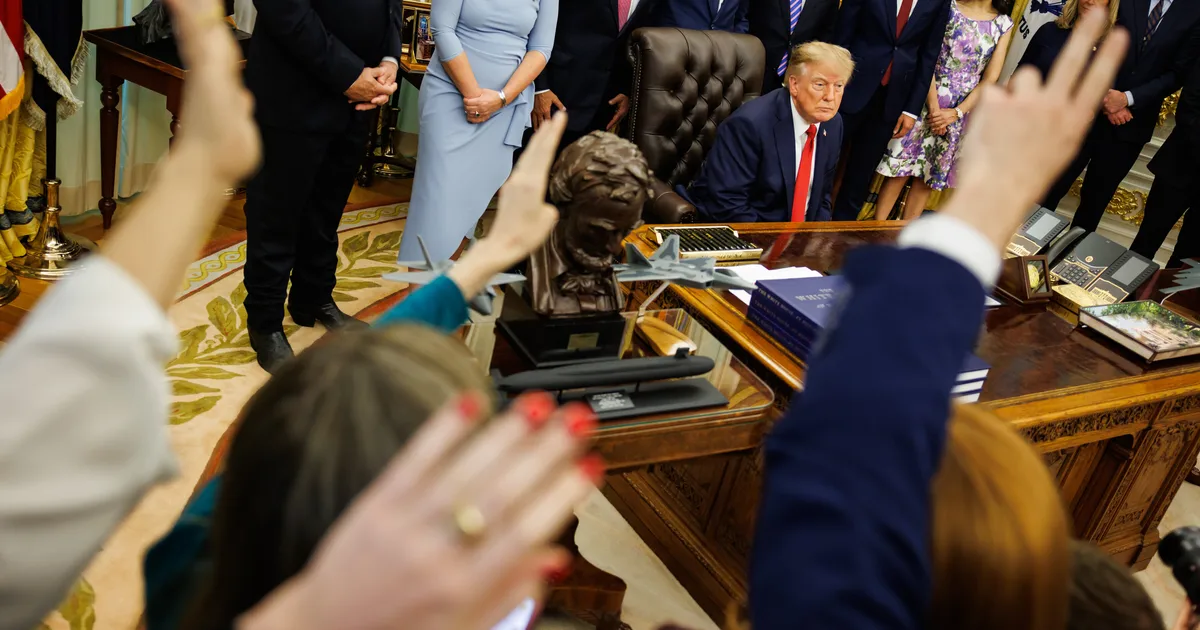
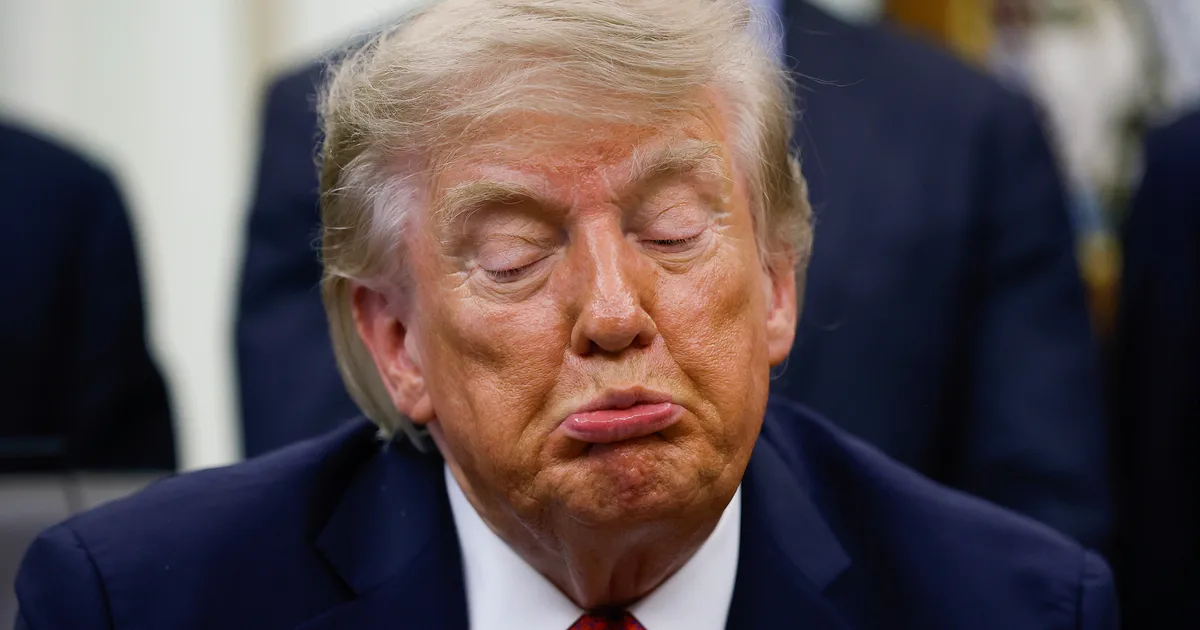
WASHINGTON — A federal judge said Wednesday he will rule soon on whether to allow President Donald Trump’s ban on three news outlets from the White House to continue.
Read more JD Vance’s Message To ‘Frustrated’ Voters Is An Attack Ad Of His Own Making, Critics Say
Judge Timothy Kelly, a Trump appointee, did not make a decision on whether to grant a temporary restraining order against the ban but said he would take the matter under advisement. He heard arguments for roughly an hour from attorneys for the outlets and the Justice Department.
Lawyers for CNN, MS NOW and Politico filed a against the administration Monday, arguing that Trump’s ban — which he said Friday on Truth Social was “a result of their constant ‘reporting’ FAKE NEWS” about him — violates the First Amendment.
Trump has not taken issue with any specific stories from the outlets and instead has said he generally dislikes their coverage of him, the lawyers pointed out.
“The president, he wears his heart on his sleeve, he declares in social media posts and from the Oval Office, ‘the coverage is too negative, the coverage is wrong.’ He disagrees with it… [the press] isn’t giving him enough credit. But he keeps saying these same things. He keeps proving our point. He’s our lead witness,” Theodore Boutrous, an attorney for the media outlets, said Wednesday.
Boutros reminded Kelly what Trump said from the Oval Office on the day of the ban.
“It’s really just cumulative stories over the last two years,” Trump said in a news conference last week.
“I don’t want them in my office. I don’t want them here. I would say the ban would go as far as you can,” he said.
Whether Trump likes coverage about him has no legal bearing on whether he can bar news organizations from covering him, the news outlet attorneys argued Wednesday. But the Justice Department that the outlets’ coverage of the administration, including reports about the Iran war and depleted ammunition levels as well as reports on the construction of the ballroom-turned-bunker on the grounds of the White House’s former East Wing, jeopardizes national security. The department has also accused the outlets of publishing sensitive or classified information and claims that reporters have failed to adhere to professional standards.
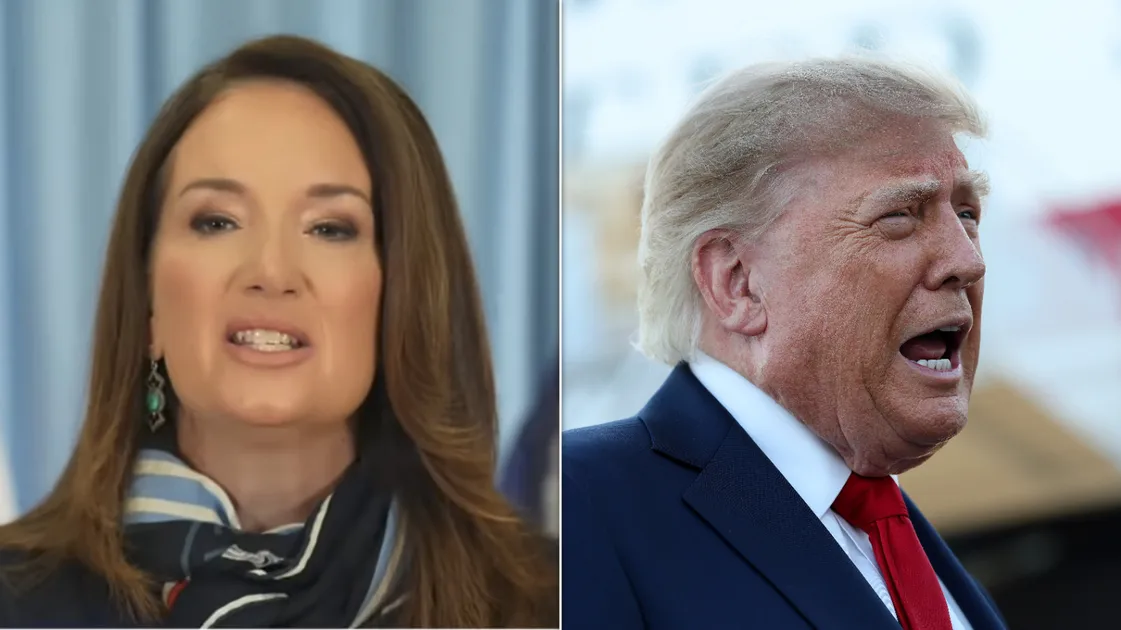
The impetus for the ban appeared to be Natalie Harp — the president’s so-called “human printer” and recent recipient of a hefty $45,000 gift — showing the president clips of media coverage he didn’t like, The Wall Street Journal reported. Among the coverage he found objectionable was an infographic from Politico, according to CNN.
In 1977, the D.C. circuit ruled in Sherrill v. Knight that the government cannot throw out or ban reporters “arbitrarily or for less than compelling reasons” and that removals could come only with a proper procedure and review process in place.
Read more These GOP Candidates Are Turning On Trump’s Iran War
When Kelly previously ruled on a press ban in Trump’s White House, Kelly restored press credentials in 2018 to then-CNN reporter Jim Acosta. The judge found that the White House had revoked Acosta’s badge without due process. At the time, Kelly was clear that his decision was narrow and that he was not ruling on whether a First Amendment violation had occurred.
In fact, as Politico reported, Kelly said he agreed with the Trump administration’s position that there was no First Amendment requirement that the White House be open to reporters. But once the press was admitted, a journalist’s right to due process kicked in, and Kelly said he had no choice but to rule in Acosta’s favor.
Last year, Trump cut access to the Oval Office, Air Force One and Mar-a-Lago for the Associated Press after the news outlet said it would continue to refer to the Gulf of Mexico by it’s original name instead of Trump’s preferred name for the water body: the Gulf of America. AP sued and a district court judge blocked the ban last April. On appeal, however, the ban was partially reinstated and in a 2-1 vote, appellate judges ruled that the president did have the right to limit some sensitive areas of the White House complex, including the Oval Office.
Kelly noted from the bench on Wednesday that in both the AP ban case and the Acosta case, the courts found reporters were owed due process.
“It was consistent… that before a journalist’s White House hardpass was suspended or revoked, that the journalist was entitled to pre-deprivation notice and an opportunity to be heard,” Kelly said.
Michael Velchik, senior counsel arguing on behalf of the Justice Department, was insistent, however, that the president had the right to deny reporters who the administration says fail to adhere to professional standards or who might harm national security with their reporting.
“The plaintiffs should be on notice: It is illegal to publish classified information. That should be well known, and I do think that it is the general standard of journalistic professionalism is widely known,” Velchik said.
Boutrous accused the White House of “using national security as this magical talisman.”
“But that doesn’t work. There are no stories about the president himself that would justify that. This is post hoc effort to justify a blatant violation of due process,” he said.
Trump on Monday announced the launch of TrumpTV, a 24/7 digital stream showing presidential footage and highlights. Kaelen Dorr, Trump’s deputy assistant for communications, called it a stream of the president’s “greatest hits.”
Read more Reviewers Over 50 Are Wondering How They Went So Long Without This $24 Kitchen Tool
This is a developing story. Please check back for updates.

Leave a Reply