
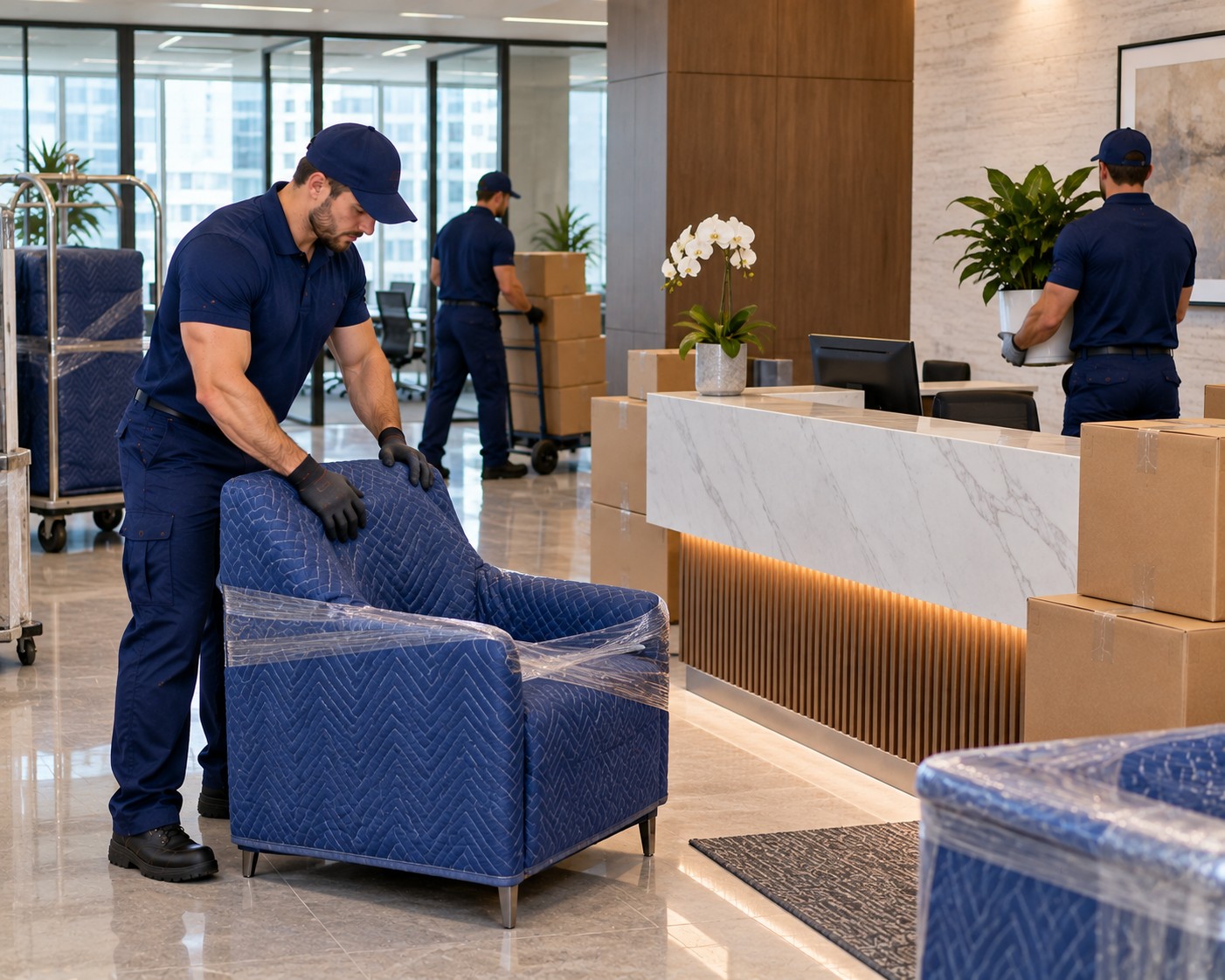
A reception area is rarely just another section of an office. It is where visitors form their first impression, where deliveries arrive, and where employees often direct clients, candidates, and business partners. During a commercial relocation, moving this space requires more thought than simply packing desks and chairs into boxes.
Professional movers approach reception areas as a combination of furniture, technology, signage, and presentation. For companies arranging https://hawaiimovingservices.com/, careful coordination can help preserve the appearance and functionality of this important part of the workplace throughout the transition.
Why Reception Areas Need Special Planning
Reception spaces often contain a surprising variety of items. A typical setup may include a reception desk, seating, decorative pieces, artwork, display stands, computers, telephones, visitor-management equipment, and company signage.
Corporate Moving Services Hawaii can begin by identifying which components need to move together and which require separate handling. This prevents a common problem: arriving at the new office with the furniture in place but essential equipment or signage still packed elsewhere.
Creating a Reception Inventory
An itemized inventory gives the moving team a practical roadmap. Large furniture can be measured before relocation, while smaller pieces can be grouped according to their destination.
Photographs can also help document how the reception area is arranged. If the company wants to reproduce a similar layout at the new location, visual references make it easier to position furniture, displays, and decorative elements correctly.
Protecting High-Visibility Furniture
Reception desks frequently feature polished surfaces, glass panels, custom finishes, or built-in storage. Scratches or chips can therefore be particularly noticeable after a move.
Movers use appropriate protective materials around corners, surfaces, and vulnerable sections. Larger pieces may need to be wrapped or secured before they leave the building. If a desk has removable panels or components, taking them apart can make transportation safer and reduce the risk of damage.
Seating receives similar attention. Chairs, sofas, side tables, and other furnishings can be protected individually so they arrive ready for placement rather than requiring extensive cleaning or repair.
Keeping Technology Under Control
Modern reception desks often function as small technology hubs. Computers, monitors, phones, scanners, access-control devices, and networking equipment may all be concentrated in one area.

Corporate Moving Services Hawaii can coordinate with the company’s IT team so that equipment is disconnected, labeled, packed, and transferred in an organized sequence. Clear labeling is particularly useful when multiple cables and devices look similar.
Separating IT From General Office Packing
Technology should not disappear into generic boxes without identification. A simple labeling system can indicate the workstation, device type, and destination.
This approach makes reconnection at the new office much more efficient. It also reduces the chance of accidentally placing reception technology in another department’s workspace.
Moving Signage and Brand Elements
The reception area is often where a company’s identity is displayed most prominently. Wall lettering, logos, framed graphics, promotional displays, and branded décor may need to be removed carefully.
Some elements can be fragile or difficult to replace, particularly custom signs. Movers can plan their handling and packaging around these pieces rather than treating them like ordinary office contents.
The goal is not simply to transport the objects. It is to preserve the visual character that makes the new reception area feel like the same business.
Coordinating Arrival at the New Office
Timing becomes critical once the shipment reaches its destination. The reception desk may need to be positioned before computers and phones are reconnected, while signage may depend on walls, lighting, or other site conditions.
A coordinated commercial move can establish a sequence for unloading and placement. Heavy furniture can be positioned first, followed by seating, technology, displays, and smaller accessories.
With https://hawaiimovingservices.com/ as a starting point for planning a professional relocation, businesses can treat the reception area as a dedicated workstream instead of leaving its setup to the final hours.
Corporate Moving Services Hawaii can also help companies account for building access, loading zones, elevators, hallway dimensions, and other practical details that influence how reception furniture reaches its final position.
A well-organized reception move allows the new office to make the right first impression almost immediately. Instead of opening the doors to a half-finished entrance, the company can welcome visitors into a space that is orderly, recognizable, and ready for business.









Leave a Reply